Salomon Shoe Size Guide: A Comprehensive Overview (Updated March 30, 2026)
Navigating Salomon footwear requires understanding their unique fit; connect with communities, share experiences, and ensure a secure, comfortable fit for every adventure.
Understanding Salomon Sizing Philosophy
Salomon’s approach to sizing prioritizes performance and a secure foot hold, often resulting in a snugger fit compared to standard brands. They cater to athletes needing precision, especially in trail running and hiking, where minimizing foot movement is crucial. This means many individuals find they need to size up half a size, or even a full size, from their usual shoe size when transitioning to Salomon.
However, it’s not a universal rule. Salomon acknowledges individual foot shapes and preferences. Their designs emphasize a close connection to the terrain, and a precise fit enhances control and responsiveness. Understanding this core philosophy – prioritizing performance through a secure fit – is the first step to finding your perfect Salomon size. Consider foot volume and sock thickness when determining your ideal fit.
Salomon Size Runs: General Considerations
Salomon’s size runs aren’t entirely consistent across all models, adding complexity to finding the right fit. While they generally adhere to standard US, UK, and EU sizing, variations exist due to differing last shapes and intended use. Trail running shoes, like the Speedcross, often run smaller than hiking boots such as the X Ultra.
Furthermore, consider that Salomon frequently updates its designs, potentially impacting sizing. Always consult the specific size chart for the exact model you’re interested in. Gender also plays a role; women’s sizes typically differ from men’s. Finally, remember that online size charts are a starting point; individual foot shape and preferred sock thickness significantly influence the optimal size. Prioritize accurate foot measurement for the best results.
Men’s Salomon Shoe Size Guide
For men, Salomon sizing often presents a snug fit, designed for performance and precision. It’s frequently recommended to size up half a size from your standard US shoe size, particularly for trail running models. However, this isn’t a universal rule; consider your foot volume and sock preference.
Accurate foot measurement is crucial. Compare your foot length in millimeters or inches to Salomon’s official size charts. Pay attention to width, as Salomon shoes tend to be narrower. Utilizing conversion charts (US to UK/EU) is helpful, but prioritize the length measurement for a more reliable fit. Remember, individual models like the Speedcross and X Ultra may have unique sizing nuances, so always check the specific product guide.
US to UK Conversion for Men’s Salomon

Converting US men’s sizes to UK sizes for Salomon footwear requires careful attention, as discrepancies can occur. Generally, a US size 7 equates to a UK size 6.5, a US 8 becomes a UK 7.5, and a US 9 translates to a UK 8.5. This pattern continues, with a half-size difference being the most common conversion factor.
However, Salomon’s sizing can be slightly more precise. A US 8.5 often corresponds to a UK 8, and a US 9.5 to a UK 9. It’s vital to consult the specific Salomon size chart for the model you’re interested in, as variations exist. Always prioritize measuring your foot length and comparing it to the chart rather than relying solely on conversion tables. Remember, these are approximate guidelines, and individual foot shapes vary.
US to EU Conversion for Men’s Salomon
Accurately converting US men’s sizes to European (EU) sizes for Salomon shoes is crucial for a proper fit. A US size 8 typically corresponds to an EU size 41, while a US 9 equates to an EU 42. A US 10 generally translates to an EU 43, and a US 11 becomes an EU 44. However, Salomon’s sizing can present nuances, so direct conversion isn’t always foolproof.
Often, a US size 8.5 will align with an EU 42 ⅔, and a US 9.5 with an EU 43 ⅓; It’s highly recommended to refer to the official Salomon size chart specific to the shoe model you’re considering. Foot length measurements, compared directly to the EU size chart, provide the most reliable results. Remember that variations exist, and prioritizing accurate measurement over generalized conversions is key to avoiding fit issues.
Measuring Your Foot for Men’s Salomon Shoes
Precise foot measurement is paramount when selecting Salomon shoes, as accurate sizing ensures optimal performance and comfort. Begin by placing a piece of paper larger than your foot flat on the floor, against a wall. Stand with your heel against the wall and trace your foot’s outline. Repeat for both feet, as sizes can differ.

Measure the longest distance from your heel to the tip of your longest toe in millimeters or inches. Add approximately 10-15mm (or 0.4-0.6 inches) to this measurement to allow for natural foot movement and sock thickness. Consult Salomon’s specific size chart, matching your final measurement to the corresponding US, UK, or EU size. Consider measuring later in the day, as feet tend to swell throughout the day.
Women’s Salomon Shoe Size Guide
Salomon’s women’s sizing differs from men’s, reflecting the anatomical differences in female feet; a precise fit is crucial for performance and comfort. Women generally have narrower heels and wider forefeet, influencing the ideal shoe shape. Begin by accurately measuring your foot length, following the guidelines detailed in the men’s section, as the process remains consistent.
However, women’s sizes are typically 1.5 to 2 sizes larger than men’s for the same foot length. Refer specifically to Salomon’s women’s size chart, converting your measurement to US, UK, or EU sizes. Pay attention to width considerations, as Salomon offers some models in wider fits. Prioritize comfort and allow for sock thickness when determining your optimal size.
US to UK Conversion for Women’s Salomon
Converting between US and UK women’s Salomon sizes requires careful attention, as the difference isn’t always a simple whole number. While a general rule suggests subtracting 0.5 to 1 size from your US size to find your UK equivalent, variations exist between models.
Here’s a common conversion guide:
- US 5.5 ⸺ UK 3.5
- US 6 ⸺ UK 4
- US 6.5 ⎼ UK 4.5
- US 7 ⸺ UK 5
- US 7.5 ⸺ UK 5.5
- US 8 ⎼ UK 6
- US 8.5 ⎼ UK 6.5
- US 9 ⸺ UK 7
- US 9.5 ⎼ UK 7.5
- US 10 ⸺ UK 8

Always consult the specific size chart for the Salomon shoe you’re interested in, as discrepancies can occur. It’s best to err on the side of caution and potentially try both sizes if possible.
US to EU Conversion for Women’s Salomon
Accurately converting US women’s sizes to European (EU) sizes for Salomon footwear is crucial for a comfortable fit. The EU sizing system differs from US sizing, and understanding the nuances ensures you select the correct shoe.
Generally, you can add 31.5 to your US women’s size to approximate the EU size. However, slight variations can occur depending on the specific Salomon model.
Here’s a typical conversion chart:
- US 5.5 ⸺ EU 38
- US 6 ⸺ EU 38.5
- US 6.5 ⸺ EU 39
- US 7 ⸺ EU 39.5
- US 7.5 ⎼ EU 40
- US 8 ⎼ EU 40.5
- US 8.5 ⸺ EU 41
- US 9 ⸺ EU 41.5
- US 9.5 ⸺ EU 42
- US 10 ⸺ EU 42.5
Refer to the official Salomon size chart for the specific shoe model for the most precise conversion.
Measuring Your Foot for Women’s Salomon Shoes
Accurate foot measurement is paramount when selecting Salomon shoes, especially for women, as proper fit enhances performance and comfort. Begin by tracing your foot on a piece of paper while standing, wearing the socks you’d typically use with Salomon shoes.
Measure the length from the back of your heel to the tip of your longest toe in both feet – discrepancies are common! Use a ruler or measuring tape, and record the measurement in inches or centimeters.
Repeat the process several times to ensure accuracy. Consider measuring your feet later in the day, as they tend to swell throughout the day.
Compare your measurements to Salomon’s official size chart, noting any differences between your left and right foot. Always size up if you’re between sizes.
Salomon Kids’ Shoe Size Guide
Finding the right fit for growing feet is crucial, and Salomon offers specific sizing for children to ensure comfort and support during activities. Children’s feet grow rapidly, so regular measurement is essential – approximately every two to three months.
Salomon kids’ sizes generally align with standard US, UK, and EU sizing, but variations can occur between models. Utilize Salomon’s dedicated kids’ size chart, readily available on their official website, for the most accurate conversion.
When measuring, have your child stand with their heel against a wall and measure from the wall to the longest toe. Always account for growth allowance, typically around 1-1.5cm (0.4-0.6 inches) to accommodate future growth.
Prioritize comfort and avoid shoes that are too tight, restricting movement and potentially hindering development.
Kids’ Size Charts (US, UK, EU)
Salomon provides detailed size charts to facilitate accurate conversions between US, UK, and EU sizing for children’s footwear. These charts are essential for online purchases or when comparing sizes across different retailers.
Generally, a US size 13.5 Kids equates to a UK size 13 and an EU size 22. Similarly, a US size 1 Kids corresponds to a UK size 10.5 and an EU size 27. However, these are approximate conversions, and slight discrepancies may exist.

Always refer to the official Salomon size chart, found on their website, for the most up-to-date and precise measurements. These charts typically list foot length in centimeters and inches, corresponding to each size in all three systems.
Remember to measure your child’s foot accurately before consulting the chart to ensure the best possible fit and avoid unnecessary returns.
Growth Allowance for Children’s Shoes
When purchasing Salomon shoes for children, incorporating a growth allowance is crucial for comfort and proper foot development. Unlike adult shoes where a snug fit is often preferred, children’s shoes require extra space to accommodate growing feet.
A general guideline is to add approximately 1-1.5cm (0.4-0.6 inches) to your child’s measured foot length. This allows room for growth and natural foot movement during activities. However, avoid excessive space, as it can lead to instability and blisters.
Regularly check the fit of your child’s shoes, as growth spurts can occur rapidly. A simple test is to press gently on the toe box; you should feel a small amount of space, but not excessive room. Prioritize comfort and functionality over maximizing shoe lifespan.
Specific Salomon Shoe Models & Sizing
Salomon’s diverse range of footwear necessitates considering model-specific sizing nuances. While the general guides provide a solid foundation, certain lines – like trail running and hiking shoes – often exhibit unique fits.
For instance, the Speedcross trail running series tends to run slightly narrow, potentially requiring a half size up for wider feet. Conversely, the X Ultra hiking line often offers a more generous fit, aligning closely with standard sizing. Winter boots, such as the X Ultra Winter CS WP, benefit from additional room for thicker socks.
Always consult model-specific reviews and sizing recommendations available on the Salomon website or from retailers. Prioritize trying on shoes whenever possible, and consider the intended use and sock thickness when determining the optimal size.
Trail Running Shoe Sizing (Speedcross, Sense Ride)
Salomon trail running shoes, particularly the Speedcross and Sense Ride models, demand precise sizing for optimal performance. The Speedcross, known for its aggressive grip, generally fits narrower, especially in the toe box. Many runners recommend sizing up a half size to accommodate foot swelling during intense activity and ensure ample toe room.

The Sense Ride, offering a more versatile fit, tends to be truer to size, but still benefits from considering sock thickness. Prioritize a snug heel hold and sufficient length – approximately a thumb’s width between your longest toe and the shoe’s end.
Remember to measure your feet later in the day when they are at their largest, and always try on shoes with the socks you intend to wear while running.
Hiking Shoe Sizing (X Ultra, Quest)
Salomon’s X Ultra and Quest hiking shoes are engineered for precision and stability on varied terrain, requiring careful attention to sizing. The X Ultra, designed for agility, often fits slightly narrower, particularly around the midfoot. Consider a half-size up if you have wider feet or plan to wear thicker hiking socks.
The Quest models, built for backpacking and longer treks, generally offer a more generous fit, but still benefit from a secure heel hold to prevent blisters. Allow for some toe room, as feet tend to swell during extended hikes, especially downhill.
Always measure your feet while wearing hiking socks and prioritize a snug, yet comfortable, fit. A properly fitted hiking shoe will enhance your stability and prevent discomfort on the trail.
Winter Boot Sizing (X Ultra Winter CS WP)
Salomon’s X Ultra Winter CS WP boots are designed for cold-weather adventures, demanding a fit that accommodates thicker socks and potential foot swelling. These boots prioritize warmth and waterproof protection, so adequate space is crucial for optimal performance.
We recommend trying on these boots with the thickest socks you intend to wear while winter hiking or snowshoeing. A half to full size up from your standard hiking shoe size is often necessary to ensure comfortable circulation and prevent pressure points.
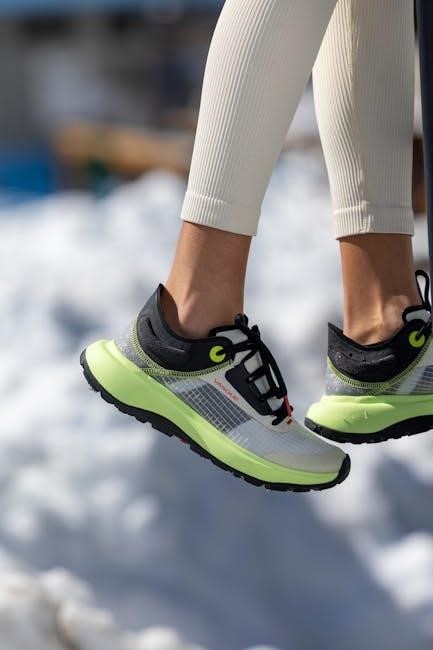
Pay attention to the toe box; ensure there’s enough room to wiggle your toes even with bulky socks. Proper fit minimizes cold spots and maximizes warmth. Prioritize a snug heel fit to prevent slippage and enhance stability on icy terrain.

Dealing with Wide Feet & Salomon Shoes
Salomon shoes generally run narrower than many other brands, presenting a challenge for individuals with wider feet. Finding the right fit requires careful consideration and potentially sizing up or exploring specific models.
Many customers with wide feet recommend going up a half or even a full size from their usual Salomon size. This provides extra width in the toe box and midfoot. However, simply sizing up doesn’t always solve the problem, as it can also affect the length and support.
Look for Salomon models with a wider toe box construction, or consider exploring options from other brands that cater specifically to wider feet. Experimenting with different lacing techniques, such as parallel lacing, can also help alleviate pressure points and improve comfort.
Salomon Shoe Width Options
Historically, Salomon has primarily focused on a standard width for most of their shoe models. This narrow fit is often favored by runners seeking a precise, secure feel. However, recognizing the diverse needs of customers, Salomon has begun to expand its width offerings in select lines.
Currently, a limited number of Salomon shoes are available in wider widths, typically denoted as “W” for women and “2E” for men. These wider options provide additional room in the forefoot and midfoot, accommodating those with broader feet. Availability varies significantly by model and region.
Checking the product description on the Salomon official website or with authorized retailers is crucial to confirm if a specific shoe comes in a wider width. Retailers often provide detailed fit information and customer reviews that can help determine if a shoe is suitable for wider feet.
Common Sizing Issues & Solutions
Salomon’s precise fit can sometimes lead to sizing challenges. A frequent issue is shoes feeling too tight, particularly in the toe box, due to the brand’s narrower last. The solution often involves sizing up a half or full size, especially if you have wider feet or prefer extra room.
Conversely, shoes feeling too loose can occur if you’ve accurately measured but the volume of the shoe doesn’t match your foot shape. Consider using thicker socks or exploring options with more adjustable lacing systems to achieve a snugger fit. Heel lock lacing techniques can also minimize slippage.
Remember to test shoes on a similar surface to your intended activity and walk around extensively before making a final decision. Utilizing Salomon’s size charts and retailer-specific guides is vital for minimizing these common fit problems.
Shoes Feel Too Tight
Experiencing tightness in your Salomon shoes is a common concern, often stemming from a precise fit designed for performance; Initially, assess if the tightness is localized – specifically in the toe box, width, or overall volume. If it’s the toe box, ensure you have at least a thumb’s width of space when standing.
The primary solution is often to size up, trying a half or full size larger. Consider the socks you intend to wear; thicker socks will naturally reduce space. Experiment with different lacing techniques, loosening the laces in the forefoot area to alleviate pressure.
If the tightness persists, explore Salomon’s width options (if available) or consider a different model with a wider last. Don’t ignore persistent discomfort, as it can lead to blisters or other foot problems. A proper fit is crucial for enjoyment and performance.
Shoes Feel Too Loose
If your Salomon shoes feel too spacious, it compromises stability and performance, potentially leading to blisters. Begin by evaluating your sock choice; thinner socks might resolve minor looseness. Focus on lacing adjustments as the first line of defense. Utilize the eyelets closest to the ankle to achieve a secure heel lock, preventing slippage.
Experiment with different lacing patterns, such as a heel lock lacing technique, to tighten the fit around your ankle and midfoot. If these adjustments aren’t sufficient, consider adding an insole to take up some volume. A thicker insole can provide a snugger fit and enhance comfort.
For significant looseness, downsizing might be necessary, but ensure adequate toe room. Remember, a secure fit is paramount for optimal control and preventing injuries during activity. Don’t hesitate to consult Salomon’s sizing resources or a professional fitter.
Where to Find More Detailed Sizing Information
For the most accurate and up-to-date sizing guidance, the Salomon official website is your primary resource. They provide comprehensive size charts, often specific to shoe categories like trail running or hiking, and detailed measuring instructions. Explore their FAQs for common sizing questions.
However, sizing can vary slightly between retailers. Always check the retailer-specific size guides, as they may incorporate customer feedback and account for potential variations in manufacturing. Many retailers, like REI or Backcountry, offer detailed sizing information alongside customer reviews that mention fit experiences.

Utilize online communities and forums dedicated to Salomon footwear to gather insights from fellow users. Reading reviews can provide valuable real-world perspectives on sizing accuracy and fit recommendations. Don’t hesitate to contact Salomon’s customer support for personalized assistance.
Salomon Official Website Size Charts
Salomon’s website hosts detailed size charts, categorized by gender (men, women, and kids) and shoe type. These charts typically include conversions between US, UK, EU, and even Japanese sizing systems, facilitating accurate comparisons. Look for dedicated charts for specific collections, like Speedcross or X Ultra, as slight variations can occur.
The website provides printable foot measuring guides to help determine your precise foot length and width. Follow the instructions carefully, ensuring accurate measurements for optimal results. Salomon emphasizes measuring both feet, as slight differences are common, and recommends sizing based on the larger foot.
Beyond basic size charts, Salomon often includes fit recommendations based on foot shape and intended activity. Pay attention to notes regarding shoe volume and width, as these factors significantly impact comfort. Regularly check for updates, as Salomon occasionally refines its sizing guidelines.
Retailer-Specific Size Guides
Many retailers offering Salomon shoes provide their own size guides, often supplementing the official Salomon charts. These guides can incorporate customer feedback and fitting data specific to that retailer’s clientele, potentially offering a more tailored recommendation. Always check the size chart on the specific retailer’s website before making a purchase, as discrepancies can exist.
Some retailers offer interactive fitting tools, allowing you to input your current shoe size in another brand to receive a Salomon size suggestion. Look for retailers with robust return policies, enabling you to easily exchange shoes if the initial size isn’t a perfect fit. Read customer reviews; they frequently mention sizing experiences with particular models.
Be aware that sizing can vary even within a single retailer depending on the shoe model. Prioritize retailer guides that specifically mention Salomon sizing, rather than generic conversion charts. Comparing multiple sources is always a prudent approach.
Return & Exchange Policies for Salomon Shoes
Understanding return and exchange policies is crucial when purchasing Salomon shoes, especially online. Policies vary significantly between retailers and even directly through Salomon’s website. Generally, most retailers offer a window of 30-60 days for returns or exchanges, provided the shoes are unworn and in their original packaging.
Always review the specific policy before completing your purchase, noting any associated return shipping costs. Some retailers may offer free return shipping, while others require the customer to cover these expenses. Keep your proof of purchase readily available, as it’s essential for processing returns or exchanges.
Salomon’s official website typically offers a straightforward return process, but it’s vital to adhere to their guidelines. Be aware of any restocking fees that may apply. A flexible return policy provides peace of mind, allowing you to confidently find the perfect fit.