Julia Child’s Beef Bourguignon: A Comprehensive Guide
Finding a reliable Julia Child Beef Bourguignon PDF can be challenging, with numerous versions circulating online; sourcing from trusted sites is crucial for accuracy.
Historical Context of the Recipe
Boeuf Bourguignon, a classic French beef stew braised in red wine, boasts a rich history deeply rooted in the Burgundy region of France. Traditionally a peasant dish, it utilized tougher cuts of beef, slowly tenderized through long simmering. The dish gained international prominence thanks to Julia Child, who meticulously documented and popularized it in her groundbreaking 1961 cookbook, Mastering the Art of French Cooking.
Prior to Child’s work, French cuisine was often perceived as inaccessible to the average American home cook. Her detailed instructions and demystification of techniques, including the crucial browning and braising processes, brought this iconic dish within reach. The availability of the recipe in PDF format further expanded its accessibility, allowing cooks worldwide to recreate this culinary masterpiece; The enduring appeal of Julia Child’s version lies in its authenticity and the emphasis on quality ingredients.
Julia Child and “Mastering the Art of French Cooking”
Julia Child’s legacy is inextricably linked to her seminal work, Mastering the Art of French Cooking, published in 1961. This cookbook revolutionized American home cooking, offering detailed, approachable instructions for classic French dishes. Her Boeuf Bourguignon recipe, a cornerstone of the book, became instantly iconic, transforming a rustic stew into a symbol of culinary aspiration.
The book’s success stemmed from Child’s meticulous approach and her commitment to teaching technique. Finding a PDF version of this recipe allows cooks to directly access her precise methods. The detailed explanations regarding browning the beef, deglazing the pan, and the lengthy braising process are hallmarks of her teaching style. The enduring popularity of the PDF demonstrates the continued relevance of her work, inspiring generations to embrace French cuisine.

The Origin of Boeuf Bourguignon
Boeuf Bourguignon, meaning “beef Burgundy,” originates from the Burgundy region of France. Historically, it was a peasant dish, born from the need to tenderize tougher cuts of beef using wine – plentiful in the region – and slow cooking methods. Farmers would utilize red Burgundy wine to both marinate and braise the meat, creating a flavorful and satisfying meal.
While the dish existed for centuries, Julia Child’s rendition, popularized through her Mastering the Art of French Cooking, brought it to international prominence. Accessing a PDF of her recipe provides a glimpse into how she adapted and refined this traditional dish for the American home cook. Her version emphasizes quality ingredients and precise techniques, elevating the humble stew to a culinary masterpiece, readily available through digital formats.
Understanding the Recipe
A Julia Child Beef Bourguignon PDF reveals a complex process, demanding patience and quality ingredients for a truly authentic and flavorful French experience.
Key Ingredients and Their Roles
A Julia Child Beef Bourguignon PDF meticulously details the essential components. The recipe hinges on high-quality beef – chuck is favored for its rich flavor and ability to become tender during the long braise.
Wine selection is paramount; a full-bodied Burgundy is traditional, contributing depth and complexity. Pearl onions and mushrooms aren’t merely additions, but integral elements, providing sweetness and an earthy counterpoint to the beef.
The PDF emphasizes the importance of browning the beef properly to develop a deep, savory base. Carrots and bacon lardons also play crucial roles, layering flavor throughout the stew. Understanding each ingredient’s function, as outlined in the PDF, is key to success.
The Importance of Beef Quality
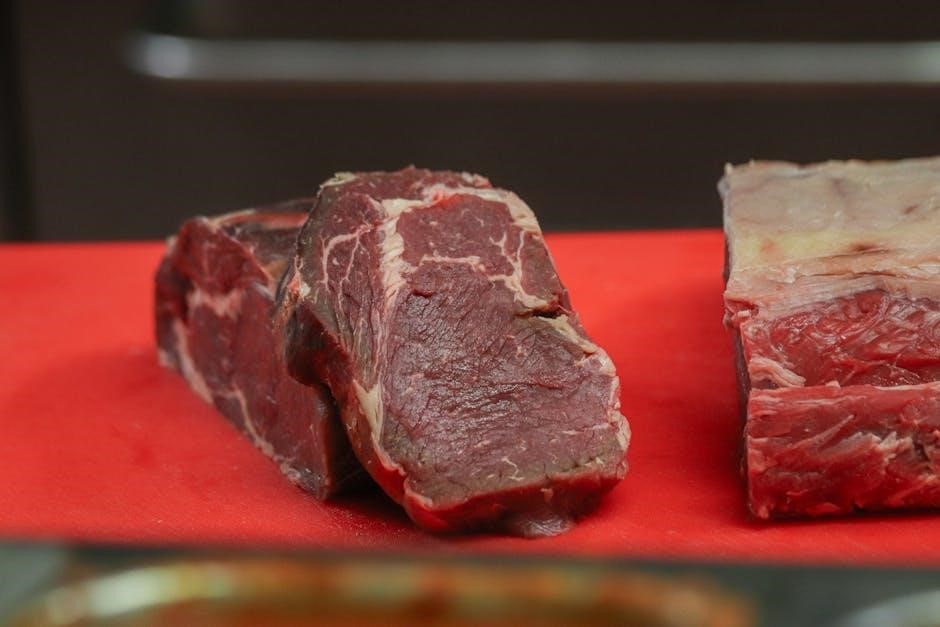
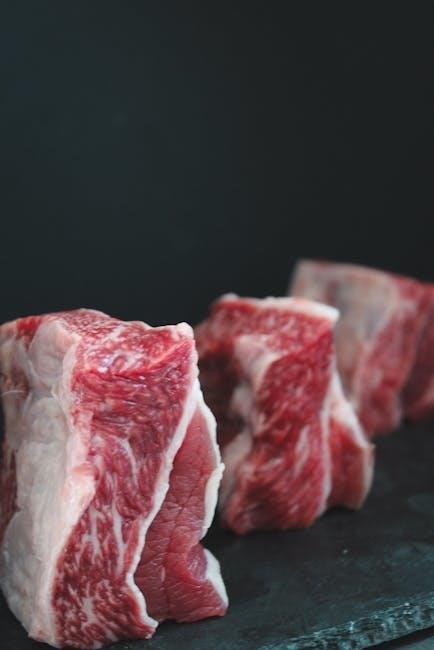
A Julia Child Beef Bourguignon PDF consistently stresses the critical role of beef selection. While tender cuts are appealing, chuck roast is preferred due to its marbling and connective tissues. These break down during the extended braising process, yielding incredibly tender and flavorful results.
The PDF cautions against using lean cuts, as they can become dry and tough. It details how the fat content contributes significantly to the dish’s richness and depth.
Investing in good quality beef, as the PDF advocates, directly impacts the final outcome. The recipe isn’t forgiving; subpar beef will noticeably diminish the overall experience, failing to achieve the desired melt-in-your-mouth texture.
Wine Selection for Bourguignon
A Julia Child Beef Bourguignon PDF emphatically states that the wine is not merely a flavoring agent, but a foundational element of the dish. Traditionally, a full-bodied, dry red Burgundy is ideal, mirroring the region of origin. However, the PDF acknowledges Burgundy can be expensive.
Acceptable substitutes, as detailed in the recipe, include other dry red wines like Pinot Noir, Beaujolais, or Côtes du Rhône. Crucially, the PDF advises against using “cooking wine,” emphasizing the importance of a wine you would happily drink.
The wine’s acidity and tannins contribute to tenderizing the beef and building complex flavors. The PDF stresses using enough wine to fully submerge the meat during braising.
Pearl Onions and Mushrooms: Traditional Additions
A Julia Child Beef Bourguignon PDF consistently highlights pearl onions and mushrooms as integral, not optional, components. The recipe meticulously details their preparation – often involving blanching and browning separately to achieve optimal texture and flavor.
The PDF explains that pearl onions contribute a subtle sweetness and visual appeal, while mushrooms (typically button or cremini) add an earthy depth. These aren’t simply tossed in; they’re carefully sautéed in butter until golden brown.
The document emphasizes the importance of adding them towards the end of the braising process to prevent them from becoming mushy. Their inclusion elevates the stew from hearty to truly refined;
Essential Cooking Techniques
A Julia Child Beef Bourguignon PDF stresses mastering specific techniques for success. Browning the beef in batches is paramount, ensuring each piece develops a rich, flavorful crust – avoiding overcrowding the pan is key. The PDF meticulously details deglazing with red wine, lifting the browned bits (fond) from the pan to build depth.
Long, slow braising is non-negotiable; the recipe emphasizes patience, typically 3-4 hours, to tenderize the beef. The PDF also highlights the importance of simmering gently, not boiling, to maintain sauce consistency.
Finally, skimming impurities during braising ensures a clear, refined sauce, a hallmark of classic French cooking, as detailed within the document.
Browning the Beef: Achieving Flavor Depth
A Julia Child Beef Bourguignon PDF consistently emphasizes the critical importance of properly browning the beef. It’s not merely about cooking the meat; it’s about developing a deep, rich Maillard reaction, creating layers of flavor. The PDF instructs to pat the beef completely dry before searing, ensuring optimal browning.
Working in batches is crucial, preventing the pan from overcrowding and steaming the beef instead of searing it. The document details using high heat and minimal oil, achieving a dark brown crust on all sides.
This foundational step, as highlighted in the PDF, is the cornerstone of the dish’s complex flavor profile.
Deglazing the Pan: Capturing Fond
A Julia Child Beef Bourguignon PDF meticulously details the deglazing process, a vital step for maximizing flavor. After browning the beef, the pan will contain a dark, flavorful residue – the “fond”. The PDF instructs to carefully pour in red wine (Burgundy is preferred), scraping the bottom of the pan to release all those caramelized bits.
This process not only prevents sticking but also incorporates the concentrated flavors into the sauce. The PDF emphasizes using a wooden spoon to effectively dislodge the fond, ensuring nothing is left behind.
The resulting wine reduction forms the base of the Bourguignon’s signature sauce.
Long, Slow Braising: Tenderizing the Meat
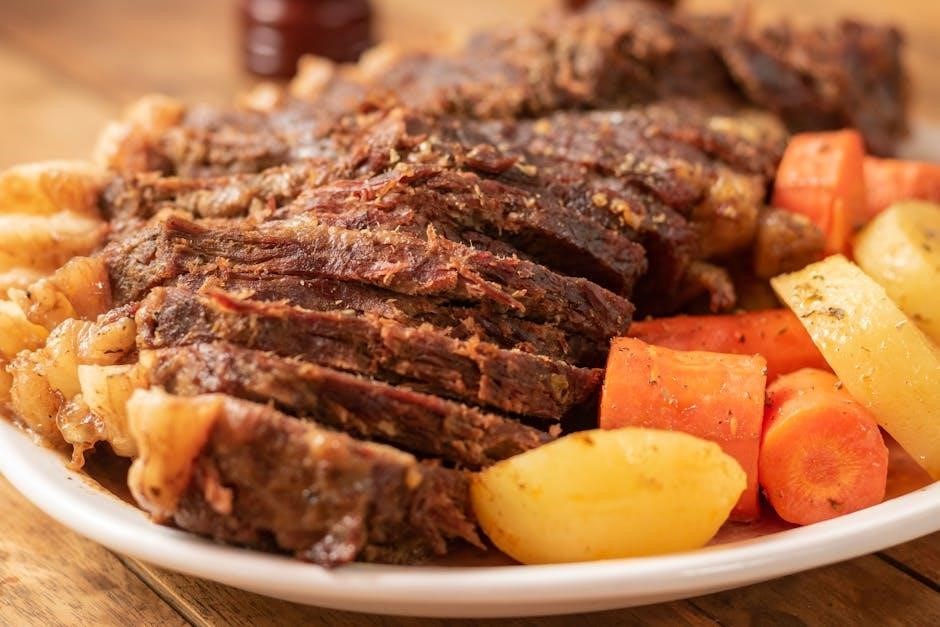
A Julia Child Beef Bourguignon PDF stresses the importance of extended, gentle braising. This isn’t a quick dish; the recipe requires several hours of low and slow cooking, typically 3 to 5 hours, to truly transform tough cuts of beef into fork-tender perfection.
The PDF details how the long braising process breaks down collagen, resulting in a melt-in-your-mouth texture. It also allows the flavors to meld and deepen, creating the rich, complex sauce characteristic of Bourguignon.
Maintaining a consistent, low simmer is key, as indicated in the PDF, ensuring the meat remains moist and tender throughout the cooking duration.
Finding a Julia Child Beef Bourguignon PDF
Numerous online sources offer a Julia Child Beef Bourguignon PDF, but verifying authenticity and completeness is vital for a successful culinary experience.
Reliable Sources for the Recipe PDF
Securing an authentic Julia Child’s Beef Bourguignon recipe PDF requires careful source selection. Several reputable platforms consistently host the classic version. The official Julia Child Foundation website is a prime starting point, often linking to verified resources.
Furthermore, many established cookbook websites and online archives feature digitized copies of “Mastering the Art of French Cooking.” Look for PDFs originating from well-known culinary institutions or libraries. Be cautious of unofficial websites, as these may contain errors or altered versions.
Project Gutenberg, a repository of free ebooks, sometimes includes older editions of classic cookbooks. Checking for scans directly from the original publication can ensure accuracy. Always cross-reference the PDF with other trusted sources to confirm the recipe’s integrity before beginning your culinary adventure.
Navigating Different Versions of the Recipe
When searching for a Julia Child Beef Bourguignon PDF, be aware that variations exist. “Mastering the Art of French Cooking” underwent several editions, leading to slight recipe adjustments over time. Some PDFs may represent earlier drafts or adaptations, differing from the final published version.
Furthermore, numerous cooks have shared their interpretations online, often inspired by Julia Child’s original but incorporating personal modifications. These adaptations can range from minor ingredient substitutions to significant technique alterations.
Carefully compare the PDF’s source and publication date to understand its lineage. Prioritize versions directly sourced from the book itself or reputable culinary websites. Recognizing these nuances ensures you’re following a version aligned with your culinary goals and expectations.
Potential Issues with Online PDFs
Downloading a Julia Child Beef Bourguignon PDF from unverified sources carries risks. Many online PDFs are scans of physical cookbooks, potentially containing errors introduced during digitization – misread ingredients or unclear instructions; Formatting issues are also common, disrupting readability and potentially altering crucial measurements.
Malware and viruses pose another threat, as compromised PDFs can infect your device. Always scan downloaded files with reputable antivirus software before opening them. Furthermore, copyright concerns arise when downloading unauthorized copies of copyrighted material.
To mitigate these issues, prioritize PDFs from trusted websites or consider purchasing a digital edition from a legitimate bookseller. Always cross-reference the recipe with a known, reliable source.

Making the Beef Bourguignon
Following a Julia Child Beef Bourguignon PDF requires patience; the process involves browning, braising, and careful sauce reduction for optimal flavor development.
Step-by-Step Cooking Instructions
Utilizing a Julia Child Beef Bourguignon PDF, begin by browning the beef in batches, ensuring each piece develops a rich color. Next, sauté bacon, then add vegetables like onions and carrots. Deglaze the pan with red wine, scraping up flavorful browned bits.
Return the beef to the pot, add beef broth, and bring to a simmer. Cover and braise for several hours until tender. Simultaneously, prepare pearl onions and mushrooms separately, adding them during the final stages of cooking.
Thicken the sauce with a beurre manié (flour and butter paste) and season to taste. A proper PDF will detail precise timings and quantities for each step, guiding you through this classic French dish.
Tips for Success and Common Mistakes
When following a Julia Child Beef Bourguignon PDF, patience is key; the long braising time is crucial for tenderizing the beef. Don’t overcrowd the pan when browning, as this steams the meat instead of searing it.
A common mistake is using a low-quality wine – opt for a Burgundy or other dry red you’d enjoy drinking. Ensure the liquid covers the beef during braising; add more broth if needed.
Carefully review the PDF’s instructions regarding the beurre manié; incorporating it correctly thickens the sauce without a floury taste. Finally, resist the urge to rush the process – slow and steady yields the best results!
Serving Suggestions and Accompaniments
After successfully navigating a Julia Child Beef Bourguignon PDF, presentation matters! Traditionally, this dish is served with buttery egg noodles, offering a delightful contrast to the rich sauce. Creamy mashed potatoes are another classic pairing, soaking up every drop of flavor.
A simple green salad with a vinaigrette dressing provides a refreshing counterpoint to the hearty stew. Crusty bread, perfect for sopping up the sauce, is an absolute must-have.
Consider a side of roasted vegetables, like carrots or parsnips, to complement the dish. A full-bodied Burgundy wine, mirroring the one used in the recipe, elevates the dining experience.

Variations and Modern Adaptations
Comparing Julia Child’s recipe with Ina Garten’s reveals subtle differences, while Instant Pot and slow cooker adaptations offer convenience for modern cooks.
Ina Garten’s Beef Bourguignon Comparison
Ina Garten’s adaptation of Beef Bourguignon, while inspired by the classic, presents notable differences from Julia Child’s original. Garten’s recipe often streamlines certain steps, aiming for a slightly quicker preparation time. A key distinction lies in the wine selection; Garten frequently utilizes a Pinot Noir, while Child traditionally recommends a full-bodied Burgundy.
Furthermore, Garten’s approach to browning the beef may involve smaller batches to ensure optimal caramelization, a technique also emphasized by Child. However, Garten sometimes incorporates bacon, adding a smoky depth not present in Child’s foundational recipe. Both chefs prioritize high-quality ingredients, but their execution diverges in subtle ways, reflecting their individual cooking styles. Finding a Julia Child Beef Bourguignon PDF allows direct comparison, highlighting these nuances.
Instant Pot/Slow Cooker Adaptations
Adapting Julia Child’s Beef Bourguignon for Instant Pot or slow cooker use offers convenience, though compromises are inevitable. While the traditional recipe demands hours of slow braising, pressure cooking significantly reduces cooking time. However, achieving the same depth of flavor requires careful adjustments. Many adaptations suggest searing the beef using the Instant Pot’s sauté function before pressure cooking.
Slow cooker versions often involve initial browning on the stovetop, followed by extended low-temperature cooking. A Julia Child Beef Bourguignon PDF serves as a crucial reference, guiding adjustments to liquid ratios and cooking times. These modern methods prioritize accessibility, but purists argue they cannot fully replicate the nuanced results of Child’s original technique.
Vegetarian/Vegan Bourguignon Alternatives
Creating a vegetarian or vegan Bourguignon, inspired by a Julia Child Beef Bourguignon PDF, requires substantial ingredient substitutions. Beef is typically replaced with hearty vegetables like mushrooms (portobello or cremini), eggplant, or seitan for a protein-rich base. Red wine remains central to the flavor profile, providing the characteristic depth.
Traditional bacon lardons are mimicked with smoked paprika or vegan bacon alternatives. Vegetable broth replaces beef broth, and careful seasoning is vital to replicate the umami richness. While deviating from the original, these adaptations capture the essence of the dish – a slow-cooked, wine-braised stew – offering a delicious, plant-based interpretation.